Showing posts with label real food diets. Show all posts

Tuesday, 29 November 2011

Real Food Diets: Going Dairy Free (Healthily & Ethically)


This last year I have been trying different ways of eating to try and regain some of my balance, energy and overall health since bearing and rearing our 2 tinies. Over the next few months I'm bringing you a whole host of wonderful guest posts on a variety of Real Food Diets, from Raw to Paleo. Join me in this series and find the best real food for your mind, body and soul.


This week's post is about seeking healthy, ethical alternatives to dairy, and trying out a delicioso Italian Citrus Polenta Cake which uses extra virgin olive oil for its fat content. Miss last week's post? We heard from Saskia at Raw Freedom about Raw Food for Busy Lives. Go check it out!

A word of caution: while I know it may be a bone of contention, when I refer to dairy here I mean specifically cow (or other animal) milk, and not eggs.


Mount Vesuvius: in sticky gorgeous citrusy-
polenta yumminess!
So it looks as if my body has undergone some kind of sea change since girl Earthly came into our lives. I'm now pretty sure that the health problems I've been experiencing the last year are down to a severe dairy intolerance, and I am putting that hypothesis to the strictest of testing now, which means NO DAIRY for me, no way josé... 


This is not the hugest of issues for me really, as I have long disliked being somewhat of a hypocrite over my ethics - I'm vegetarian for lots of reasons, but I think the dairy industry is horrific and yet I continue to consume dairy... It doesn't wash really, does it? So now I must stop being lazy as my body is also telling me to give up animal milk. 


What I DO have a problem with, is that my main alternative to dairy is soya. Quite apart from any issues surrounding the mass-production and importation of soya, I dislike having soy products as a major part of my diet because they are so processed. I think margarine, in any form, is the devil's work, and soy milk - as convenient and tasty as it is - isn't much better.


So what to do?! I believe, at heart, that our diets should be as pure, unprocessed and close to source as possible - that way we obtain the maximum nutrition in the right forms for our bodies with fewer adverse effects. And so I really dislike vegan recipes which simply substitute "alternatives" to dairy in the form of soy or whatever, just as much as I dislike vegetarian recipes which feel they need to use meat alternatives. I'm not saying these products don't have their place - I love tofu and the occasional Quorn product - but they should not be the norm. 


And so... after searching in vain for a "dairy free" cake recipe yesterday, it was (as usual) Father Earthly that came to the rescue. I knew I married him for good reason(s)... It's all about where to look when it comes to Googling, and I was looking in the wrong place. It wasn't vegans that held the answer for me, but the wonderful Italians! 


This cake uses good quality extra virgin olive oil for its fat content. Now, I have used vegetable oil before - the Americans use it quite a lot in cakes - but I have never heard of using olive oil in cakes before. Not just that, but it calls for the full-flavoured, really good stuff! What a wonderful idea, on so many levels - a fat that is really superbly good for you, is pure and unprocessed and full of flavour. Also, as you may have noticed, at the moment, olive oil is ridiculously cheap so there is just no good reason not to be trying out this yummy recipe!


Italian Citrus Polenta Cake (adapted from this recipe at Babbo Ristorante)
4 large eggs 

1 cup granulated sugar 

Freshly grated zest and juice of 1 orange 

Freshly grated zest and juice of 1 lemon 

1 ½ cups unbleached all-purpose flour 

¾ cup instant polenta 

2 teaspoons baking powder 

1 teaspoon salt 

¾ cup extra-virgin olive oil 

1 cup icing sugar


Preheat the oven to 180ºC and position a rack in the center of the oven. Lightly grease a 9-inch springform pan with a little oil.


Whisk together the eggs and sugar until they are tripled in volume, fluffy and pale yellow in colour. Combine the flour, polenta, baking powder salt and zest in a separate bowl. 


Alternate adding the dry ingredients to the egg mixture with the olive oil; begin with 1/3 of the dry ingredients, then add half the oil, followed by another 1/3 of dry ingredients, beating only until each addition is incorporated. Beat in the remaining olive oil, followed by the last 1/3 of the dry ingredients.


Pour the batter into the prepared pan and bake the cake for 25 to 30 minutes. Rotate the cake 180º halfway through the baking time to ensure even browning. The cake is done when it springs back lightly when touched and pulls away from the sides of the pan, and a cake tester inserted in the center comes out clean.


Take the cake out of the oven and place in the tin on a wire rack. Make the syrup by boiling the lemon and orange juice and icing sugar together in a pan until the icing sugar has dissolved. Prick the cake all over with a cake tester and pour over the syrup. Leave the cake to cool in the tin before turning out.

Wednesday, 16 November 2011

Guest Post - Real Food Diets: Raw Food for Busy Lives, by Saskia from Raw Freedom


This last year I have been trying different ways of eating to try and regain some of my balance, energy and overall health since bearing and rearing our 2 tinies. Over the next few months I'm bringing you a whole host of wonderful guest posts on a variety of Real Food Diets, from Raw to Paleo. Join me in this series and find the best real food for your mind, body and soul.


This week's post comes from Saskia at Raw Freedom. Miss last week's? We heard from Jennifer at Hybrid Rasta Mama on Fermented Foods. Go check it out!


Free up your life with Raw Freedom coaching!
Hello! I'm Saskia, experienced raw food and life guidance coach from Raw Freedom. I'm very pleased to be a guest on Mamma Earthly's fabulous blog and to be writing this post for all the busy folk who are interested in eating raw food but don't want to spend hours in the kitchen.

It's common for people to think that preparing raw food takes a long time and if you went by the majority of raw recipe books you'd be right! Most raw recipe books are created by raw food chefs. The recipes are delicious and exciting but also tend to be quite complex and time consuming to make. I love food and when I first started eating raw food nearly 5 years ago I bought the loveliest, shiniest raw recipe books I could find on the internet.  I was totally bowled over by the flavour and look of these super-fresh meals but totally under-whelmed by the amount of time it took to prepare them. I loved the idea of eating raw food and how it made me feel but I didn't want to spend my life in the kitchen.  

I'd always loved playing around with flavours and creating my own cooked recipes so I decided to turn my hand to creating delicious raw recipes that were super quick and easy to make. I pared down the complex recipes I'd found in those chef-written raw recipe books (with ingredients lists as long as my arm!) and refined them for my busy life without compromising on the sophistication and interest of the flavours. I'm pleased to say that my raw food meals quickly took less time to prepare than my cooked meals used to!

Of course there are tips and tricks to quick raw food so here is my list of must-haves for people with busy lives who want to experience the energy, vitality and great health that eating raw gives you:
1. A good blender - investing in a good blender means you can whiz up raw smoothies, soups, sauces, pates and puddings in no time at all. Blenders range from good hand blenders to commercial blenders such as Blendtecs (my preferred high-power blender) and Vitamixes.2. Quick recipes - although the chef-created raw recipes look and taste really exciting they aren't designed for people with busy lives. Look out for recipes with a maximum of 15 ingredients (preferably with less than 10). I give my clients an army of soups, smoothies, pates and puddings that take less than 10 minutes to make, taste utterly delicious and save them from eating junk or from snacking on too many nuts.3. Preparation - thinking one or two meals ahead will mean that you always have what you need when you're ready to make a meal (i.e. always soak a handful of nuts and/or seeds overnight because you can use them in a breakfast, smoothie or pate the next day and they'll keep in the fridge for up to 3 days, ready and waiting)4. Stock ingredients - make a stock-items shopping list so you always have the ingredients for super quick recipes. There's nothing slower than trying to make raw food from ingredients that need soaking and/or dehydrating! My personal stock quick-recipe ingredients are avocados, spring onions, mineral salt, agave, vanilla essence and a few superfoods. With these I can make something delicious straight away, or add whatever veggies or fruit I have to make a lovely soup, pate, smoothie or pudding. 5. Stock recipes - get well practiced at about 5-10 recipes so that you can quickly put them together, hardly looking at the recipe itself. Favourite stock recipes are my Spicy Tomato Soup, Hazelnut & Banana Superfood Smoothie, Spicy Walnut Pate, Cashew Cheese Sauce, Marinated Mushrooms and Lime Mousse. You can't go wrong with these!
Here's a very normal example of the high raw food diet that I eat during a day in my busy and exciting life ...
Saskia's Raw Lime Mousse
  • Breakfast - A smoothie with fruit/veg and dark leafy greens (less than 10 minutes to make, including washing the fruit/veg and the blender afterwards)
  • Mid-morning snack - a piece of fruit
  • Lunch - salad with raw pate and rice or oatcakes (15-20 minutes including washing the fruit/veg and washing up)
  • Tea-time - a superfood smoothie with nut milk and banana (less than 10 minutes to make, including washing the fruit/veg and the blender afterwards)
  • Supper - raw soup (less than 10 minutes to make, including washing the fruit/veg and the blender afterwards)
At the weekends you can make up a batch of raw chocolates or energy balls that you can snack on during the week. This is great if you've got kids too, because you can all make them together. Before I started raw food coaching I worked away from home. I would make my breakfast and afternoon smoothie as well as my lunch before I went to work. It was a lovely way to wake up as I chopped the veg and admired the colours and textures of the food I was preparing for later. And of course I felt amazing and full of energy! No matter what you're lifestyle it's very possible to eat a high raw diet that's quick, easy and packed full of the nutrition you need to be fantastically healthy, gorgeous and energetic. It's just about having the right pieces in place to be able to make super-quick and deliciously vibrant raw food.

Saskia has made her life's work as a raw food coach, after discovering a turning point in her own life. At the age of 32 she tried a 2-week raw food trial. In those two weeks she went from suffering IBS, eczema, sore joints, bad skin, terrible memory and stress related emotional issues to being completely well again. Sold on the idea of raw food as a way of 'healing the body', she now wants to tell everyone else about it!

You can find Saskia on her blog, Facebook and Twitter.

Monday, 7 November 2011

Guest Post - Real Food Diets: Fermented Foods, by Hybrid Rasta Mama


This last year I have been trying different ways of eating to try and regain some of my balance, energy and overall health since bearing and rearing our 2 tinies. Over the next few months I'm bringing you a whole host of wonderful guest posts on a variety of Real Food Diets, from Raw to Paleo. Join me in this series and find the best real food for your mind, body and soul.


This week's post comes from Jennifer at Hybrid Rasta Mama. Miss last week's? We shared some great ideas for a raw kid's tea party! Go check it out!

Sour Fermented Pickles
When Mamma Earthly put a call out for posts related to various “nutritional lifestyles” I set to work figuring out what I wanted to share with her readers. My family is gluten free, we follow a traditional foods/real food diet, and currently, my toddler and I are on the GAPS (Gut and Psychology Syndrome) diet. In addition, I pay attention to some of the tenets of the blood type diet as I personally have seen a correlation between my blood type and my body’s ability and inability to handle certain foods. On top of that, I am a former vegetarian and a born again lover of fats.


I have written about all of these topics extensively on my blog and instead of rehashing it all, I will leave a list of links at the end of this post if you are interested in learning more. What I would like to focus on here is fermented foods. Fermenting foods the way our ancestors did is a lost art but one that is making a comeback.


Traditionally fermented foods like grass-fed cheese, kefir, miso, olives, pickles, sauerkraut, tempeh, and yogurt are some of the oldest and healthiest foods on the planet. The term “fermented” may sound unpalatable but this ancient preparation and preservation method, which involves breaking down carbohydrates and proteins using microorganisms such as bacteria, molds, and yeast, produces delicious food. More importantly, these foods contain probiotics that can be beneficial to your overall health. 


Why did our family decide to incorporate traditionally fermented foods into our diet? Here is a short list outlining the benefits and the reasons why we keep a well-stocked refrigerator of various fermented foods and beverages. 


Fermented foods improve digestion. Fermenting our foods before we eat them is like partially digesting them before we consume them. According to Joanne Slavin, a professor in the Department of Food Science and Nutrition at the University of Minnesota, “…sometimes people who cannot tolerate milk can eat yogurt. That’s because the lactose (which is usually the part people can’t tolerate) in milk is broken down as the milk is fermented and turns into yogurt.”


Fermented foods restore the proper balance of bacteria in the gut. Do you suffer from lactose intolerance? Gluten intolerance? Constipation? Irritable bowel syndrome? Yeast infections? Allergies? Asthma? All of these conditions have been linked to a lack of good bacteria in the gut.


Water Kefir, Gingered Carrots, "Mr Googly": Gluten Free
Sourdough Starter, and Preserved Lemons.
Raw, fermented foods are rich in enzymes. Your body needs enzymes to properly digest, absorb, and make full use of your food. As you age, your body’s supply of enzymes decreases. This has caused many scientists to hypothesize that if you could guard against enzyme depletion, you could live a longer, healthier life.


Fermenting food actually increases the vitamin content. Fermented dairy products consistently reveal an increased level of folic acid which is critical to producing healthy babies as well as pyroxidine, B vitamins, riboflavin and biotin depending on the strains of bacteria present. 


Eating fermented food helps us to absorb the nutrients we’re consuming. You can ingest huge amounts of nutrients, but unless you actually absorb them, they’re useless to you. When you improve digestion, you improve absorption.


Fermenting food helps to preserve it for longer periods of time. Milk will go bad in the fridge but kefir and yogurt last a lot longer. Sauerkraut, pickles and salsa will keep for months. And if you’ve got a huge batch of produce in your garden that you don’t know how to use up — ferment it!


Fermenting food is inexpensive. There’s nothing fancy required for this hobby. And many of the foods required to make these recipes are very cheap. You can use inexpensive cabbage to make sauerkraut, or get yourself a kombucha scoby and with just pennies’ worth of water, sugar and tea, you’ve got a health elixir slash soda pop.


Fermenting food increases the flavor. There’s a reason humans enjoy drinking wine and eating stinky cheese. There’s a reason we like sauerkraut on our hot dogs and salsa on our tortilla chips. It tastes good!


I will admit, sometimes the smell and look of fermented foods does make them a little daunting to consume. However, for me, it is simply a mind over matter thing and I always end up liking them quite a bit. For others, consuming ferments may not be so easy. Here are a few ways in which I have to found to make ferments appealing to others (specifically my husband as my toddler consumes ferments with gusto):

  1. When I serve ground meat or sausage, I discreetly pour a small amount of juice from lacto-fermented pickles, or sauerkraut onto the meat. Sometimes I also mix tiny, chopped dill pickles or other fermented veggies into our meat.
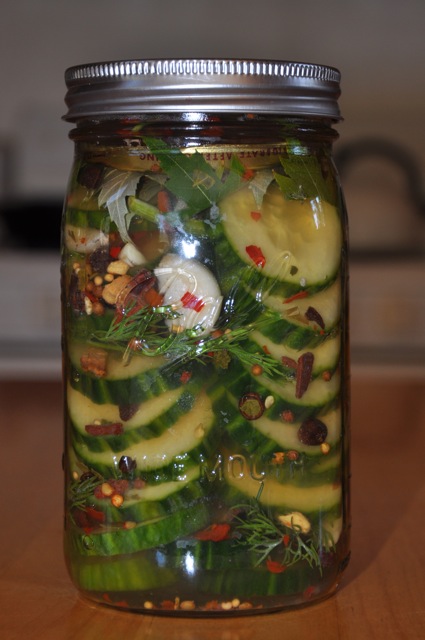
  2. If you enjoy pickles, make your own! The store version of pickles are not fermented. Yes, fermented pickles do have a “different” taste as vinegar is not used. However, once you perfect your recipe you will probably find that you enjoy fermented pickles quite a bit more. These are easy to make and very tasty. Everyone in our household loves my pickles. 
  3. I make my own lacto-fermented ketchup. Yes, ketchup (and mustard, mayo, relish) and pretty much everything that goes on a hamburger or hot dog has its roots in a traditionally lacto-fermented condiment. These are easy to make at home. I will also sometimes mix store bought organic condiments with fermented ones. This “improves” the taste for my husband’s picky palate.
  4. I use yogurt, milk kefir and buttermilk to make smoothies. 
  5. Gingered carrots are delicious and very palate pleasing. Again, if you can chop it very finely and mix it with cooked ground meat it can be much easier to present. This is also great topped on soup.
  6. I make all kinds of dips from yogurt, sour cream, cream cheese, salsa, and guacamole (all homemade and all cultured). You can mix just about anything into these cultures to make wonderful dips that everyone will enjoy. I have even tackled a cultured hummus that was amazing!
  7. Water kefir and kombucha are both delicious, mineral-rich, fermented beverage that can be sweetened with a small amount of fruit juice. We drink tons of both around here. Beat kvass is another reall great probiotic drink. It is really tasty too.
  8. Unpasteurized soy sauce is a great condiment to sprinkle on something as simple as veggies and brown rice. This soy sauce is usually only available by special order, but try your local Asian market for Nama Shoyu. 
  9. Traditional miso is a fermented food product that, when added to cooled broth, provides an excellent avenue for getting fermented foods into your diet. I make several soups with traditional miso and they never last long. 
  10. I have recently begun making homemade crackers and have found that I can dehydrate various fermented veggies and add them into my cracker dough. It is a great way to incorporate ferments and no one is the wiser. 

If you have young children, start them on fermented foods and beverages as early as you can. Their palates are less discerning and they will tend to enjoy the fermented foods quite a bit. 

If you are not already making and consuming fermented foods, I suggest that you consider doing so. Cultures for Health is a great resource offering everything you need to get started. In addition, I took an online cultured foods class where I literally learned how to make everything possible. It is offered by Nourished Kitchen


Best wishes to you should you decide to explore fermented foods. 


Blessings,
Jennifer


As promised, here are links to my posts related to my food journey:
Confessions of a Former Vegetarian
Eating Traditional Foods and the Blood Type Diet
GAPS Intro Diet – Yep, I Am On It
GAPS Intro – 2 Week Update
My Eyes Are Wide Open; A Series:
  Part 1 - My Journey Towards Better Health
  Part 2 – Let’s Talk About Fats
  Part 3 – Don’t Call Me Betty Crocker
Real Food Resources
Real Food for Real Kids


Hybrid Rasta Mama: A Natural Parenting, Healthy Living BlogJennifer is a former government recruiter turned stay-at-home mama to a precious daughter (“Tiny”) brought earthside in early 2009. She is passionate about breastfeeding (especially extended breastfeeding), bed-sharing, co-sleeping, attachment parenting, cloth diapering, green living, babywearing, peaceful parenting, a Waldorf approach to education and parenting, playful parenting, getting children outside, as well as cooking and eating Real/Traditional Foods. You can find her over on her blog, Hybrid Rasta Mama, FacebookTwitter, Pinterest, Google+ and StumbleUpon.

Monday, 24 October 2011

Real Food Diets: Raw for Kids


This last year I have been trying different ways of eating to try and regain some of my balance, energy and overall health since bearing and rearing our 2 tinies. Over the next few months I'm bringing you a whole host of wonderful guest posts on a variety of Real Food Diets, from Raw to Paleo. Join me in this series and find the best real food for your mind, body and soul.


This week's post covers raw tea party treats for kids, young and old! Miss last week's? We heard from Mampoekie about the Paleo diet. Go check it out!

Raw Tea Party!
Eating raw is not just for adults: in fact it is probably one of the best possible diets a child could have. If you're feeling stuck for inspiration or are struggling with the concept of getting your child to eat raw, what better way to get you all in the mood than having a raw tea party?! Here are a few ideas to get you started :)

Raw Carrot Cake
From The Raw Chef

3 cup carrot, finely grated
2 cups pecans, ground in a food processor
1/4 cup raisins, roughly chopped
1 teaspoon nutmeg
1 1/2 teaspoon mixed spice
Date paste**
1/2 teaspoon salt
1/2 teaspoon orange zest
1/2 cup desiccated coconut

** Make the date paste by grinding 1 cup soft dates and 1/2 cup orange juice in a food processor until smooth.

- Thoroughly mix all ingredients together in a large bowl.
- Shape into individual cakes or press into one large cake, ready to be cut at the end.
- Place on a dehydrator sheet and dehydrate at 115 degrees F for 8 – 12 hours. If you don’t have a dehydrator you can simply place the cake into the fridge to set.


Carroty Cakey Goodness!
For the frosting
1 1/2 cup cashews
1/2 cup water
2 tablespoons agave
3 tablespoons coconut oil
1 tablespoon vanilla
1/4 teaspoon salt

- Blend all ingredients in a high speed blender until smooth.
- Place in fridge to achieve a thicker consistency and spread on cake when you’re ready to serve.
- Garnish cake with nutmeg.


Raw Tea Sandwiches
From Rawmazing

2 beets
1 cucumber (half sliced, half diced)
1 cup pine nuts
1 tablespoon nutritional yeast
1/4 cup water
2 tablespoons lemon juice
1/2 cup thinly sliced scallions
1 cup cucumber, diced (use the other half of the cucumber from above)
1 tablespoon tarragon
Himalayan salt and pepper to taste

- Slice the beets and half of the cucumber into thin rounds.
- Place pine nuts, nutritional yeast, water, and lemon juice in food processor. Process until very well blended.
- Stir in the scallions, diced cucumber and the tarragon.
- Salt and pepper to taste.
- You can either make little stacks with the beets and cucumbers, or just place a mound on top of a beet slice or cucumber slice.

Soft Serve Banana Ice Cream!
Raw Banana Ice Cream
From Choosing Raw
2-3 frozen bananas
2tbsp agave syrup
1tbsp cacao powder

- Process bananas in the food processor until light, fluffy and smooth. Either serve immediately (consistency will be softer) or freeze fully before serving in an ice cream maker / tupperware in the freezer.
- Make topping by combining agave and cacao and pouring over :)

This recipe can of course be adapted endlessly to incorporate different flavours, textures, chunks and bites... whatever you desire!

Happy tea partying!

Related Posts Plugin for WordPress, Blogger...